Our stories
Our Unlearning Stories: How We Found Intersectional Feminism
September 28, 2026
This episode is for you if you’ve ever felt like everyone else in the room has read more, done more, and figured it all out before you. Spoiler: we didn’t either.
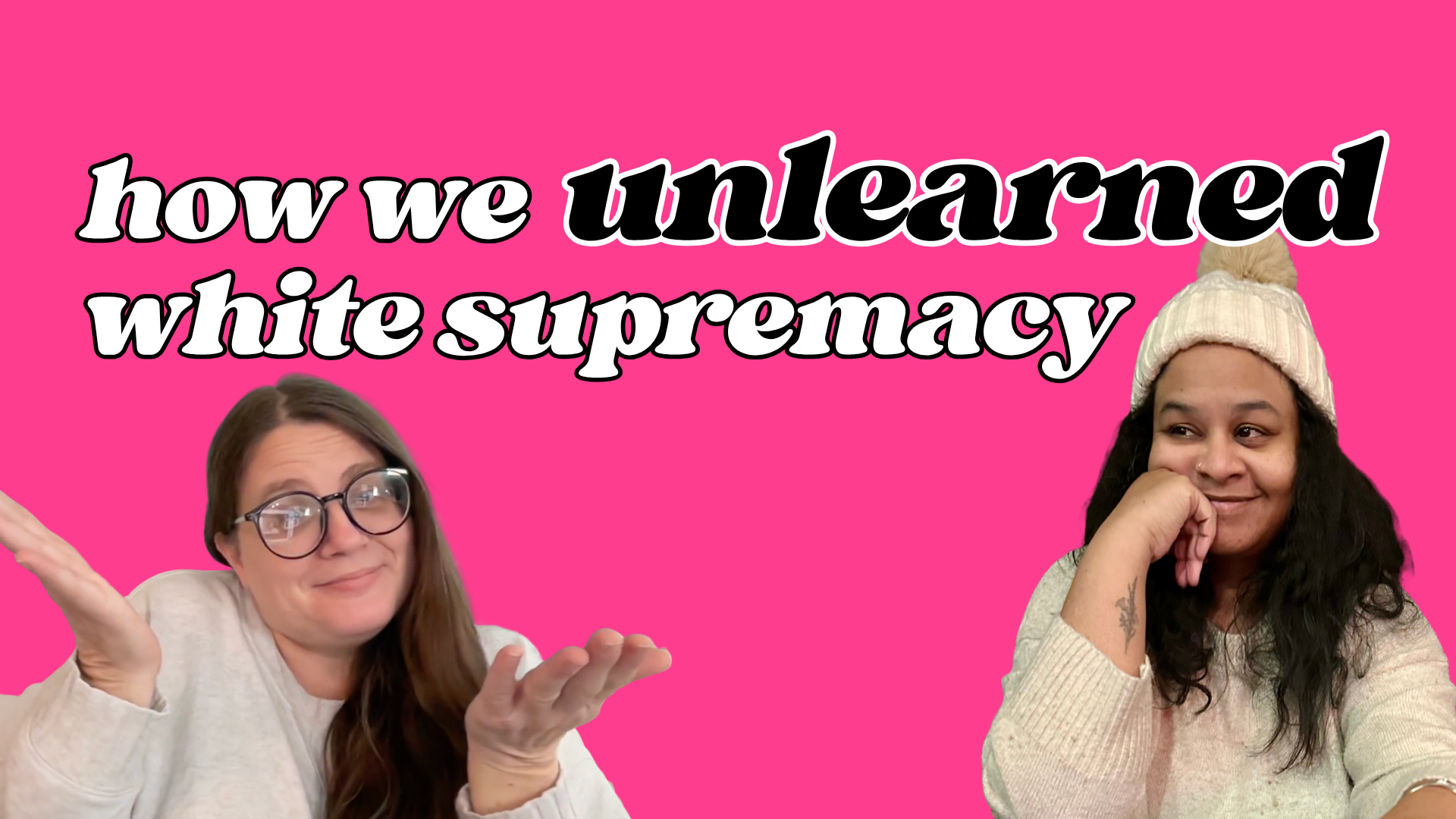
Becky and Taina share their feminist origin stories: how each of them came to see the white supremacist capitalist patriarchy, and what unlearning and relearning has looked like since. Taina talks about getting fired from her evangelical church, where a congregation with “90 nations represented” still had white men at the top, and finding intersectional feminism at a women’s college through three readings that finally gave her language for what she’d lived.
Becky traces her path from her mom’s “we don’t see color” second-wave feminism to white saviorism on the Obama campaign, then to Ferguson, bell hooks, Audre Lorde, and starting a feminist reading group. They both talk about being queer before they knew they were queer, internalized homophobia, and why holding a marginalized identity doesn’t protect anyone from internalizing oppression.
“For the very first time, I was like, that’s what I’ve been feeling this whole time… I now have the language to talk about these experiences that I’ve had.”
— Taina Brown
Prefer to listen?
🎧 Listen on SpotifyIn This Episode, We Get Into:
- What “unlearning and relearning” means, and why it looks so different depending on your identities
- Getting fired from a church, and how churches run like any other exploitative workplace
- A congregation with “90 nations represented” and white men at the top
- Why “my Black friend voted for Trump” isn’t a real argument, and how internalized oppression works
- Taina’s move from evangelical faith to women’s studies, and the three readings that gave her language for what she’d lived
- Where intersectionality actually came from: Kimberlé Crenshaw’s legal scholarship
- Becky’s mom, colorblind second-wave feminism, and what happened when Becky brought home a Black boyfriend
- White saviorism, campaigning for Obama, and the disillusionment afterward
- Ferguson, bell hooks, Audre Lorde, and starting a feminist reading group
- Being queer before you know you’re queer, internalized homophobia, and no longer feeling like you’re co-opting a community that’s yours
Timestamps
- 01:00 – Origin stories, and why our journeys look different
- 02:53 – Growing up evangelical
- 04:33 – “I didn’t think racism was still a thing”
- 07:15 – Holding an identity doesn’t protect you from internalizing oppression
- 10:00 – An intense friendship and the first signs of queerness
- 12:30 – The three classes that changed Taina’s life
- 16:34 – Leaving the church: “People are flawed, but God isn’t”
- 23:21 – Becky’s origin story: raised outside religion
- 26:02 – Second-wave feminism and “we don’t see color”
- 29:38 – White savior complex and campaigning for Obama
- 32:38 – Ferguson and the murder of Michael Brown
- 36:31 – Our pansexual identities
- 42:37 – You don’t need a PhD to belong
Resources Mentioned
- “Who Is Your Mother? Red Roots of White Feminism” by Paula Gunn Allen
- The Seneca Falls Convention and the Declaration of Sentiments
- The Combahee River Collective Statement
- “Demarginalizing the Intersection of Race and Sex” by Kimberlé Crenshaw
- Feminism Is for Everybody by bell hooks
- Sister Outsider by Audre Lorde (including “Uses of the Erotic”)
- Pleasure Activism by adrienne maree brown
- White Feminism by Koa Beck
- Our interview with Koa Beck
Question for you: What’s your unlearning origin story? Was there a moment, a class, a book, or a person that gave you language for something you’d always felt?
📚 The Collective Care Reading List 📚
A curated TBR to define your community, take back your power & grow your liberation journey.