Politics & media
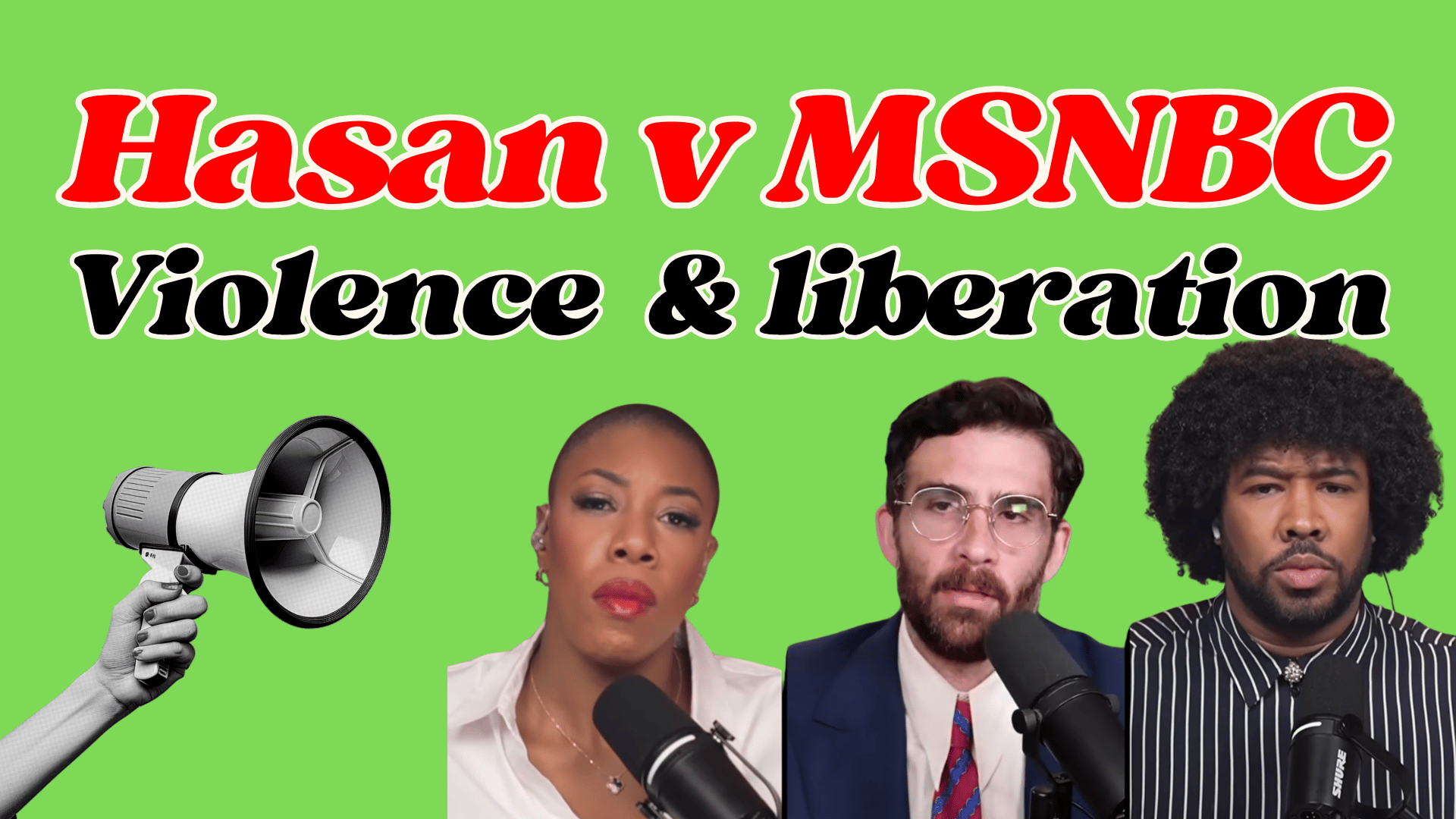
Is Violence Part of Liberation? Breaking Down Hasan Piker, MSNow, and Palestine
[AIR DATE]
This episode is for you if you say you’re here for the revolution but flinch at the word “violence.” Or if you’ve ever wondered why the state’s violence gets called order while resistance gets called terrorism.
Becky and Taina break down the viral Clock It interview where Symone Sanders-Townsend and Eugene Daniels pushed back on Hasan Piker. It happened when he compared Palestinian resistance to people fighting police violence in the US. Sanders’s response was “I don’t like you comparing me to Hamas.” That opens up a bigger conversation. Taina uses the World Health Organization’s broader definition of violence, which includes poverty, deprivation, and discrimination. She also names the direct line from IDF training to US police and even campus security.
From there, they get into the history we’re taught versus what actually happened. MLK and Gandhi were never working alone. Fred Hampton, Malcolm X, the Panthers, and Stonewall are part of the story too. And enslaved people freed themselves. They also talk about how corporate media (yes, including MSNBC) keeps liberal audiences in the dark about AIPAC, and why you can agree with someone’s argument without co-signing everything they’ve ever said. The episode ends with a plea to keep asking “why?” It’s one of the last tools the system hasn’t fully taken from us.
In This Episode, We Get Into:
- The viral Clock It interview: Hasan Piker, Symone Sanders-Townsend, Eugene Daniels, and “I don’t like you comparing me to Hamas”
- Why state-sanctioned violence becomes invisible, and why resistance to it gets labeled terrorism
- The WHO’s definition of violence: poverty, deprivation, and discrimination count too (so do six police cams on your block and no streetlights)
- US police, and even Georgia State’s campus security, trained by the Israeli Defense Forces
- How people inside the system uphold it, whatever identities they hold
- MSNBC, AIPAC, and media consolidation: why liberal viewers never hear the whole story
- The myth of the lone hero: MLK, Gandhi, and the collective (sometimes violent) action that forced power to listen
- Stonewall, slave uprisings, and how we rewrite history so we look like we were always on the right side
- Agreeing with someone’s argument without co-signing everything they’ve ever said
- Curiosity as resistance: keep asking “why,” watch out for what AI does to our thinking, and lean on community so you don’t have to do it alone
Resources Mentioned
- The Hundred Years’ War on Palestine by Rashid Khalidi
- Freedom Is a Constant Struggle by Angela Davis
- Original Sins by Eve L. Ewing
- Clock It with Symone Sanders-Townsend and Eugene Daniels (MSNBC / MS NOW)
- Hasan Piker
- World Health Organization’s definition of violence
- Independent media: Qasim Rashid, Don Lemon, and The Bulwark
📚 The Collective Care Reading List 📚
A curated TBR to define your community, take back your power & grow your liberation journey.