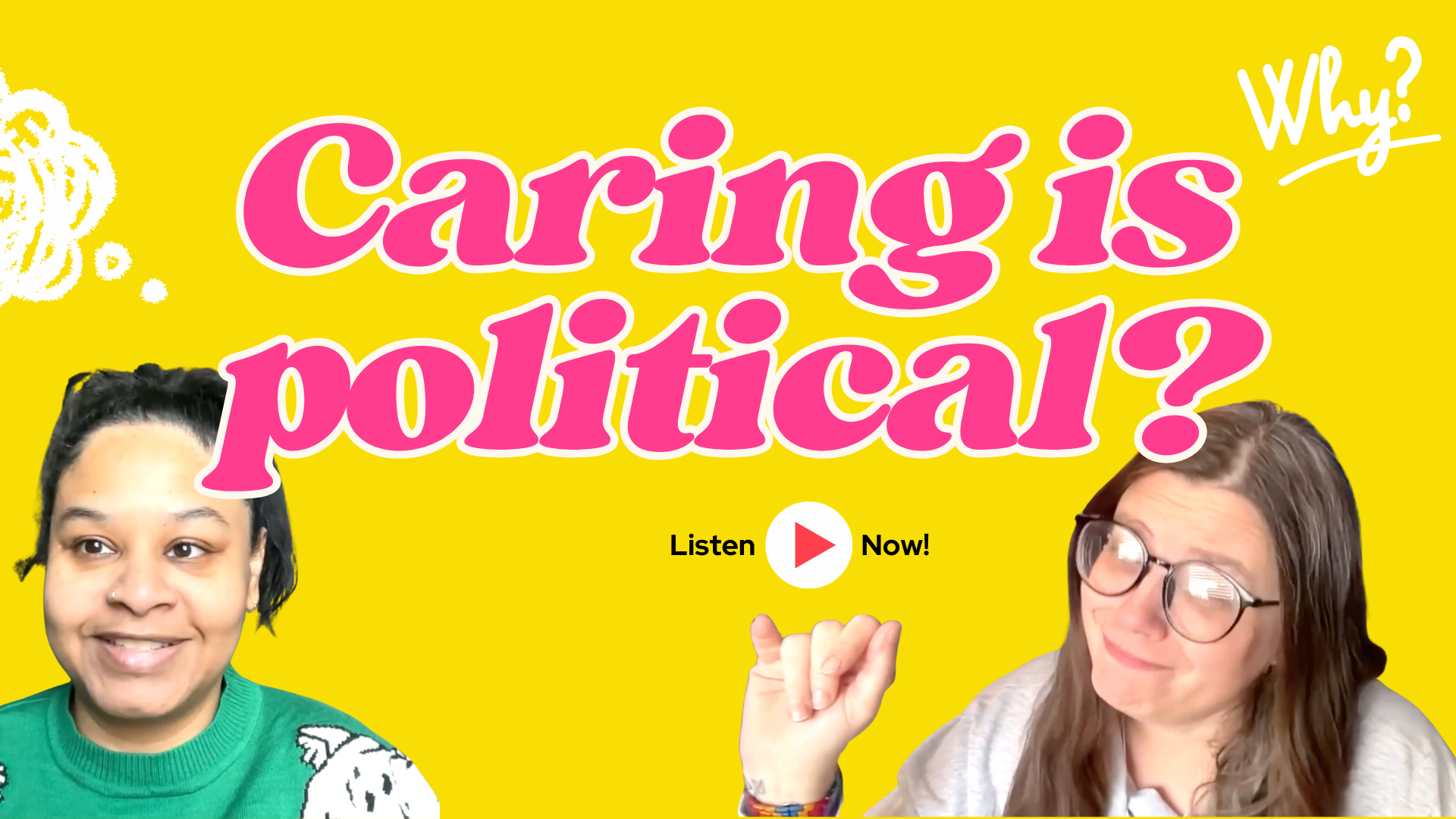
Care Is Political: Mutual Aid, Snowstorms, and Supportive Partnerships
A Messy Liberation podcast episode hosted by Becky Mollenkamp and Taina Brown.
What this episode is about
From neighbors shoveling driveways to the quiet labor of holding community spaces, this episode explores how care becomes invisible — and how naming it can be radical. We talk about the difference between care that reinforces hierarchy and care that builds solidarity.
Becky shares a story about hosting invitation-only “secret salons” and grappling with the discomfort of being compensated for community-building work. Taina reflects on moments when emotional labor was unexpectedly acknowledged — and how powerful that recognition can be.
This episode is for you if…
You’re interested in the distinction between charity and mutual aid, and you want to explore what it actually takes to survive crises — including climate disasters — together.
Discussed in this episode
- What mutual aid looks like in everyday life (and why it’s not charity)
- Snowstorms, disability, aging, and who gets left behind
- The invisible labor of care, organizing, and community-building
- Why being seen matters as much as being paid
- Emotional labor, race, gender, and power dynamics
- Checking privilege — and why it changes the room
- Supportive partnerships vs. entitled masculinity
- Why “I’d never do that” is a red flag
- Capitalism, commodification, and collective responsibility
- How acknowledgment can be an act of liberation
Why it matters
When care is treated as “extra,” the people doing it become disposable — and the people depending on it get left behind. Mutual aid isn’t charity with better branding. It’s a practice of solidarity: shared responsibility, shared risk, and shared survival.
Resources mentioned
Want more conversations like this — plus context, community, and upcoming events?
Join the email list